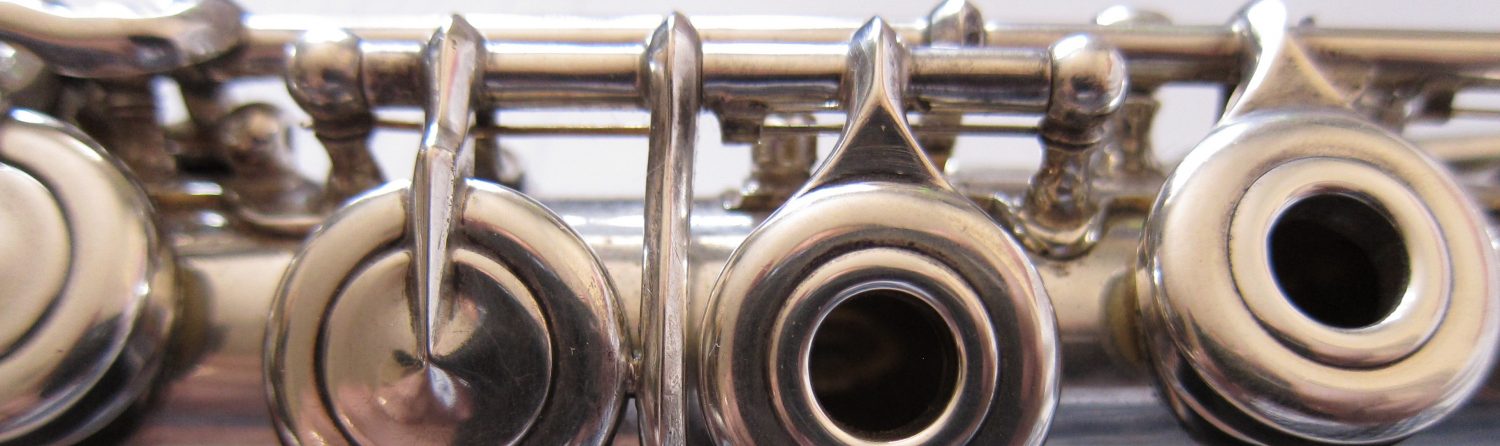
In the middle of December, 2018, the final corks, felts and shims were installed and adjusted on the open G sharp flute I was overhauling. It was finally ready to be enjoyed. I was planning to wait until much later to transition, but the sound it was producing while testing it was so alluring, that I began to practice immediately, forgetting my plans to play one final concert using Mateki that I had been playing the past decade, a closed G sharp instrument from which I was retiring, from the mechanism that I had used all my life so far!
What began as an experiment to see, at my age (57), whether I can still learn a thing or two, turned into a passion where I can’t get enough of the quality of sound, I just found out I was missing all my flute-playing life. I never realized how playing the closed G sharp key threw off the melodic line – at G sharp (or A flat). Now that I’m playing the open G sharp mechanism, I see the intent of composers so much more realized.
It is a difficult thing to learn to do something I had been doing all my life, differently and unfailingly. I hear of people who’ve gone through stroke and had to relearn how to speak or walk. I don’t mean to compare the magnitude of the trauma and the impressiveness of their overcoming it, but if you would, my flute finger dexterity has been shattered, and my flute playing future is now on the line because of my curiosity. Will I be able to emerge from this to play like I used to? and if I may be so greedy, even better? It is by sheer will power that I overcome.
The charm of playing etudes by Anderson and Boehm makes me want more and more of that sound. At one point, I felt I’ve mastered keeping the left-hand pinky down most of the time, and I feel good…until I get to the third octave. That’s when I wonder why did I ever try this out? Correcting all of the cross fingerings required in the third octave is very discouraging. The problem is, there is no turning back. Just like Pandora’s box, the new fingering has so corrupted my playing ability that I have no choice but to keep practicing and forging ahead. I did choose the red pill, didn’t I? Was innocence of knowing only one way of playing (the blue pill) better?
Was it worth it? I feel like I found a secret treasure chest.
What do I want to get out of this experience:
- I want to introduce to the world the virtues of this mechanism which is not only simpler, but also more correct than what is now considered standard. I don’t see very much in the entire Internet on this topic.
- I want to get back to performance level to show the world what the sound of open G sharp instrument is like.
- I also would like to see if anyone notices the difference the way I do (or am I just delusional?)
- Did Split-E mechanism really solve the 3rd octave E to render open G sharp key meaningless?
- I want to understand the history of this instrument and find out why almost no one plays it today.
- I want to find out who uses this mechanism in the professional world and what their views are.
- I want to find out from the world-class flute makers what they think of this mechanism.
- I want to find out how much of my instrument sounds the way it does because of open G sharp mechanism (it’s a Wm. S. Haynes instrument from 1960, considered to be from the golden era.)
- I want to find out if student level instruments sported open G sharp mechanism, how they would compare?
- I want to find out what would happen if a beginner were to start with the open G sharp mechanism, and if he/she pursues music, how much of the mechanism will be naturally learned. Which are truly awkward or facilitated fingerings?
With this blog, I want explore all of these interests as I hope to spark an interest in this almost extinct mechanism. Can the world change for the better? Does the modern world have what it takes to embrace what is more correct? Let’s find out!
 Open G-Sharp Flute Advocacy